

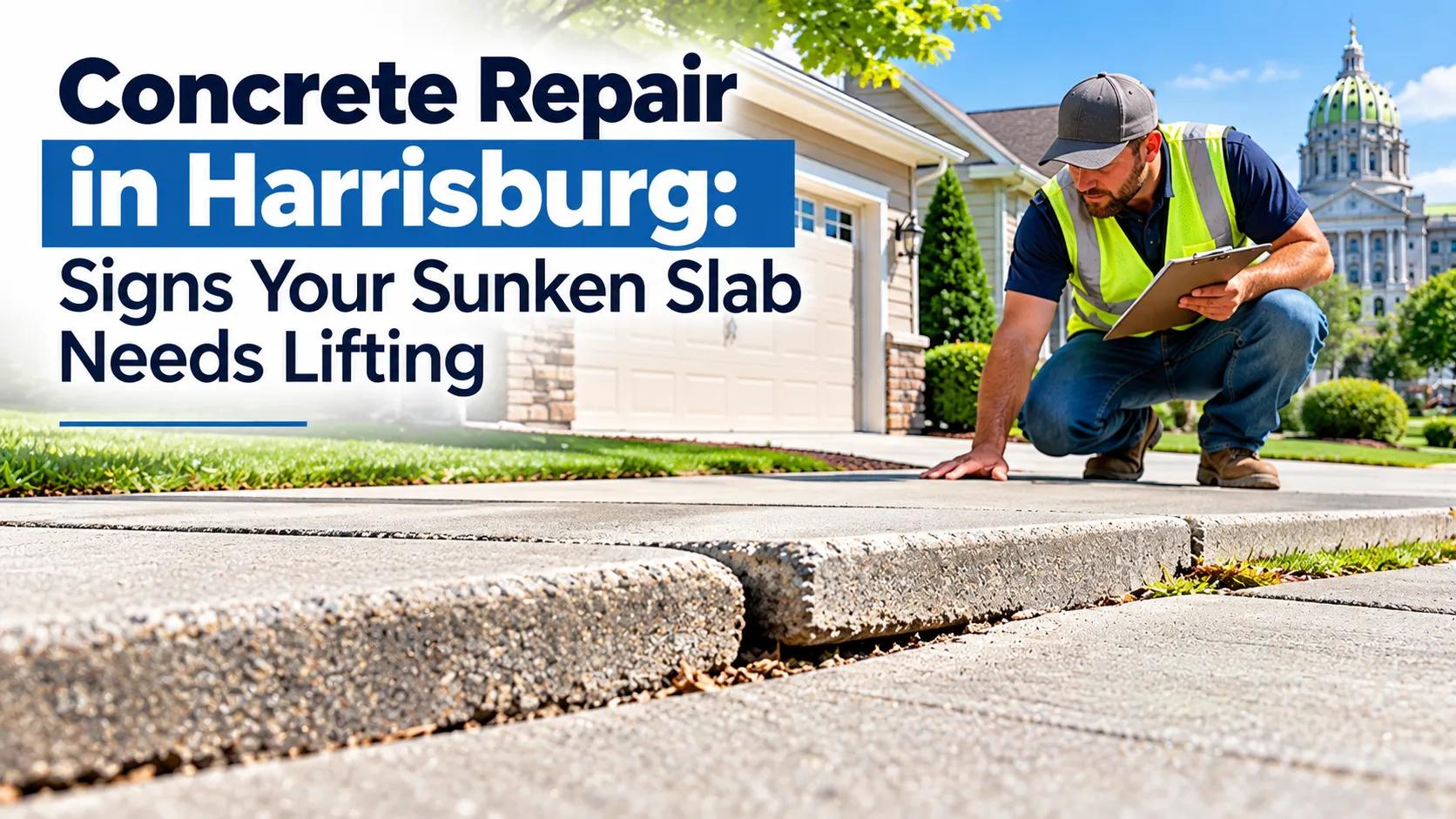
Central Pennsylvania is hard on concrete. Rain soaks the soil, winter freezes it, spring thaws it, and the ground shifts a little each time. A driveway that looked fine last summer can have a raised edge by the following fall.
If you are shopping for concrete repair in Harrisburg, the first question is not who to call. It is what your slab actually needs. Some slabs need a patch, some need replacing, and many just need to be lifted. Here are the signs that point to lifting.
Why Slabs Sink in the First Place
The concrete is rarely the weak link. The soil under it is. Common causes include:
Runoff or leaking pipes that wash soil away
Poor compaction when the slab was poured
Tree roots that dry out or move the ground
Freeze and thaw cycles that loosen the base over time
Each one leaves a hollow space under the slab. With nothing to hold it up, the concrete drops.
Signs Your Slab Needs Lifting
You do not need special tools to spot the trouble. Watch for these clues:
One slab sits lower than its neighbor, leaving a raised edge.
Water pools in one spot or runs toward your garage or foundation.
A walkway, patio, or driveway tilts in a direction it never did before
Gaps open along the joints between slabs.
Cracks appear with one side lower than the other.
The slab sounds hollow when you tap it.
Steps pull away from the door or porch.
Family and guests keep tripping in the same place.
Two or three of these together point to a void underneath, and that is a lifting problem, not a surface problem.
A Crack Is Not the Same as a Sunken Slab
Hairline cracks are common in concrete and often harmless. A patch or sealant can handle them.
Sinking is different. If one side of a crack sits lower than the other, the slab has lost support. Filling the crack only hides the symptom. The slab keeps moving until the void is filled.
How Lifting Works
Good concrete lifting services Follow a clear process:
Inspection. A technician measures the drop, taps for hollow spots, and checks whether the concrete is sound enough to lift.
Marking. The crew marks injection points across the slab.
Drilling. Small holes go through the concrete.
Injection. Polyurethane foam or a mudjacking slurry fills the void and raises the slab.
Leveling. The crew lifts in small stages and checks with a level.
Finishing. Holes are patched, and the area is cleaned up.
Many jobs wrap up in a single visit.
A Quick Example
Picture a walkway near a front porch in the Harrisburg area. One slab has dropped an inch below the next, and the edge catches a shoe every few days. Rain also drains toward the house instead of away.
The concrete is solid. It just lost its support. With concrete lifting services, a crew drills a few small holes, fills the gap, and raises the slab until the edges match. No demolition, no new forms, no waiting days for fresh concrete to cure.
When Lifting Is Not the Answer
An honest crew will tell you when to skip it. Replacement may be better when:
The concrete is crumbling or broken into many pieces.
The surface is worn all the way through
A larger foundation problem is causing the movement.
That straight answer can save you from paying for a repair that will not hold.
A Tip Before Your Estimate
Spend ten minutes preparing. Walk the area after the next rain and note where water collects. Take photos of the low spots, and measure the drop, even roughly. Also check gutters and downspouts, since runoff is a common reason soil washes out. Fixing the water problem helps the repair last.
Why Choose Lift It Pro
For concrete repair in Harrisburg, Lift It Pro offers:
A free estimate. You get a clear diagnosis and price before you commit.
A satisfaction guarantee. The crew stands behind its work.
Residential and commercial service. Home walkways and business lots get the same care.
Foam and mudjacking options. The method fits your slab, not the other way around.
Many surface types. Sidewalks, driveways, pool decks, interior slabs, and underground void filling.
Lower cost than replacement. Leveling often runs about half the price of tearing out and repouring.
The team also serves York, Lancaster, Hanover, and Gettysburg, so they know the soil and weather across the region.
Final Thoughts
A sunken slab is not something to put off. Water keeps washing out the soil, the drop gets bigger, and a small repair slowly becomes a big one. Lifting is often the fastest, cheapest, and least messy way to fix it.
If you notice any of the signs above, a quick inspection will tell you where you stand. The right concrete lifting services should leave you with a clear plan and an honest price, nothing more and nothing less.
Frequently Asked Questions
How long does lifting take?
Most jobs finish in a single visit. Your technician will tell you when it is safe to walk or drive on the surface.
Is lifting cheaper than replacement?
Usually, yes. Leveling often costs about half as much, and you skip the demolition and cure time.
Will my slab sink again?
It can if water keeps washing out the soil, so fix drainage too. Also, Lift It Pro can only warranty concrete that is at least 10 years old, so ask about terms at your estimate.
Can every slab be lifted?
No. Badly broken or crumbling concrete may need replacement. The inspection will tell you which route makes sense.
Ready to Fix Your Sunken Slab?
Do not wait for a small dip to become a costly repair. Visit liftitpro.com and book your free quote today. The team will inspect your slab, explain every option, and give you a clear price.